People often think about healthy eating in terms of individual products: less sugar, more vegetables, fewer takeaways, perhaps an occasional “superfood”. Yet one of the most frequently used ingredients in the kitchen often receives very little attention: the fat we cook with, dress with and add to food every day.
Oil appears in salads, pasta, vegetables, bread, sauces, fish, meat and soups. Because it is used so regularly, its quality may matter more than many expensive products bought only once in a while.
Health is built through repetition
A good diet is not created by one perfect meal. It is created through hundreds of ordinary choices repeated over months and years.
What do you pour over vegetables? What do you use to finish pasta or fish? What sits beside the bread at the table? Which fat becomes part of your family’s normal way of eating?
These small choices are easy to overlook precisely because they are so familiar. But the foods used every day deserve more attention, not less.
Not every bottle of olive oil is the same
Two bottles may look similar while the oils inside differ greatly in freshness, flavour, origin and production quality.
The final character of an olive oil is influenced by the olive variety, fruit condition, harvest timing, speed from tree to mill, extraction, storage and protection from light, heat and oxygen.
A genuine extra virgin olive oil should not be understood simply as a more expensive version of an ordinary cooking oil. At its best, it is fresh fruit juice produced from olives with care, knowledge and discipline.
Why regular use matters
Good extra virgin olive oil is rich in monounsaturated fat and can replace poorer-quality fats in everyday meals. It also helps make vegetables, legumes, fish, grains and simple home-cooked food more enjoyable.
This matters because a healthy diet is easier to maintain when good food also tastes good.
A quality olive oil cannot repair an otherwise poor diet and should never be presented as a miracle cure. It can, however, become one of the foundations of a better food culture: less dependence on heavily processed sauces, more cooking from basic ingredients and greater enjoyment of simple meals.
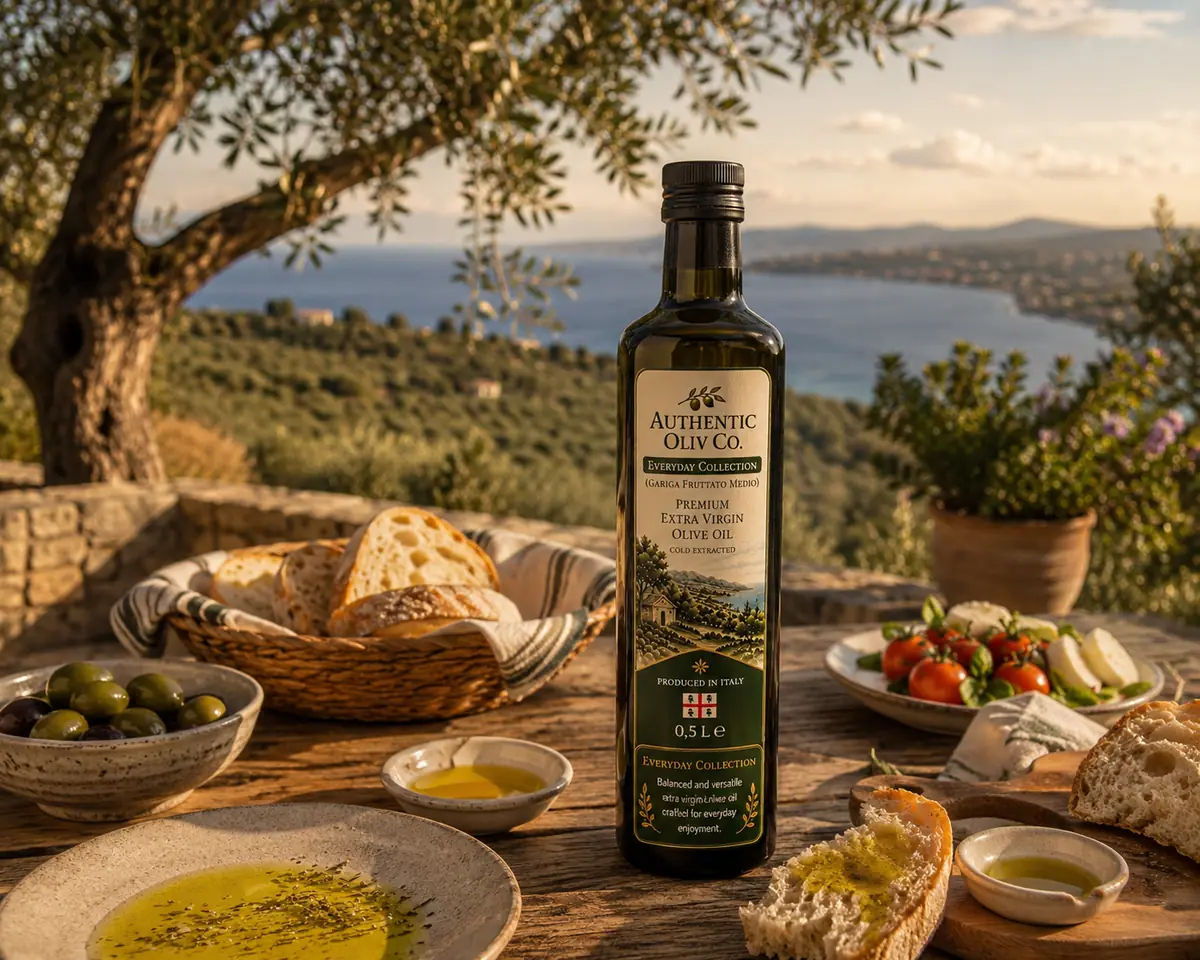
The mistake of saving on ingredients used every day
People sometimes spend freely on products used rarely, while trying to save as much as possible on food that enters the body every day.
A bottle of quality olive oil may look expensive when judged only by the shelf price. But it is used across many meals. A spoonful can finish a plate of vegetables, improve a tomato salad, bring life to beans, bread, pasta, soup or grilled fish.
The real question is not only “How much does the bottle cost?” It is also “How much value does it add to each meal?”
Good olive oil encourages simpler food
When ingredients are good, food does not need to be hidden under heavy sauces, excessive salt or artificial flavouring.
Tomatoes, good bread, grilled vegetables, fish, pasta, cheese and herbs can become a complete and satisfying meal with the right olive oil.
This is one of the strengths of Mediterranean cooking: quality is created not by unnecessary complication, but by respecting ingredients.
What should consumers ask?
- Is the producer clearly identified?
- Is the origin transparent?
- Does the oil have a fresh aroma and a distinctive taste?
- Is information available about harvest, production or laboratory testing?
- Is the bottle protecting the oil from light?
- Is the product being stored correctly?
Colour alone does not prove quality, and a high price does not guarantee excellence. What matters is the combination of provenance, freshness, sensory quality, production discipline and honest information.
Make good olive oil part of normal life
Good olive oil should not remain unopened for “a special occasion”. It should be used while it is fresh and enjoyed as part of ordinary food.
Use it on vegetables, beans, salads, pasta, soups, bread and fish. Taste it. Compare it. Learn how different olive varieties change the character of a dish.
Health is not built by one dramatic decision. It is built through small choices repeated every day. The oil used in your kitchen is one of them.