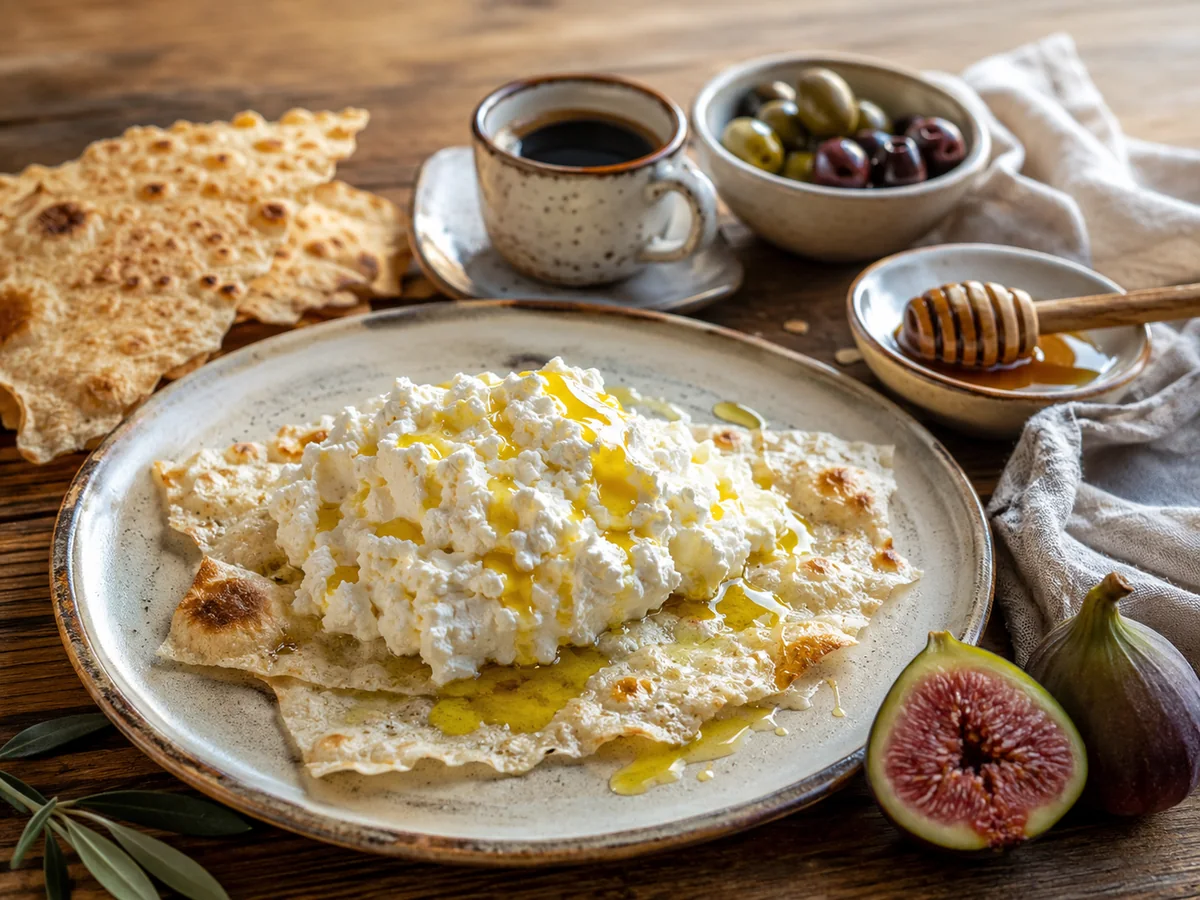
Sardinian breakfast: pane carasau with ricotta, honey and extra virgin olive oil
This simple dish brings together several products deeply connected with Sardinian cuisine:
- pane carasau — thin, crisp Sardinian bread,
- fresh ricotta, preferably sheep’s milk ricotta,
- a small amount of honey,
- good extra virgin olive oil,
- fresh figs or other seasonal fruit.
It can be served with coffee, a few olives or fruit. The strength of this breakfast lies not in a complicated recipe, but in the quality of a few simple ingredients.
Ingredients for one serving
- 2–3 pieces of pane carasau,
- 100–120 g fresh ricotta,
- 1 teaspoon of honey,
- 1–2 teaspoons of extra virgin olive oil,
- 1 fresh fig or a small portion of seasonal fruit,
- optional: a few nuts, a pinch of cinnamon or lemon zest.
How to prepare it
Pane carasau can be served dry or lightly moistened with water to make it a little more flexible.
Spread the ricotta over the bread. Drizzle it with a small amount of honey, then add the extra virgin olive oil. Place the sliced fig alongside.
The olive oil should not completely cover the flavour of the ricotta. Its role is to add freshness, a fruity aroma and a lightly peppery finish.
The dish is ready in around two minutes.
What does each ingredient contribute?
Pane carasau
The bread provides mainly carbohydrates, the body’s basic source of energy for the muscles and brain.
If you choose a wholemeal version, it will also provide more fibre. Wholegrain foods and fruit help increase dietary fibre, which supports normal bowel function and may help prevent constipation.
Ricotta
Ricotta contributes:
- protein,
- calcium,
- vitamin B12,
- milk fat,
- greater satiety from the meal.
Protein is needed to maintain and repair muscle. This is particularly important for active and older people, for whom preserving muscle mass and strength affects mobility, balance and independence.
Ricotta is also a source of calcium. According to USDA data, half a cup of whole-milk ricotta provides around 255 mg of calcium.
Extra virgin olive oil
Olive oil provides mainly monounsaturated fats.
Replacing some saturated fats with unsaturated fats is consistent with British dietary guidance and may support cardiovascular health. Olive oil should nevertheless be used sensibly because all fats are calorie-dense.
In this dish, olive oil also has a culinary role:
- it highlights the flavour of the ricotta,
- balances the sweetness of the honey,
- carries aromas,
- provides a longer feeling of fullness,
- makes a simple meal more complex in sensory terms.
Figs
Figs provide:
- natural sugars,
- water,
- fibre,
- potassium and other minerals.
Fibre, together with sufficient fluids, supports stool volume and regular bowel movements. It does not act as an instant laxative — a regular diet, hydration and movement are most important.
Honey
Honey adds flavour but remains a source of simple sugars.
It is worth using as an addition rather than the main part of breakfast. One teaspoon is enough to soften the acidity of the ricotta and connect it with the fruity character of the olive oil.
Approximate nutritional value
A serving containing around 100 g of ricotta, pane carasau, one fig, a teaspoon of honey and two teaspoons of olive oil may provide approximately:
- 400–500 kcal,
- 12–18 g protein,
- 20–28 g fat,
- 40–55 g carbohydrates,
- around 3–6 g fibre.
The exact result depends on the type of ricotta and the quantities of bread and olive oil.
How does it affect energy and physical function?
This breakfast does not increase “motor function” magically. It can, however, support physical capacity by providing suitable nutrients:
- carbohydrates replenish the energy needed for movement,
- protein supports the muscles and their recovery,
- fat slows gastric emptying and may prolong satiety,
- calcium participates in normal muscle function,
- fibre supports the digestive tract.
For someone doing physical work, walking or working on a farm, this meal may provide steadier energy than a sweet pastry and coffee alone.
It is not ideal in every situation. A large amount of olive oil, full-fat ricotta and honey can create a very calorie-dense meal. A less active person can use less olive oil and honey and add more fresh fruit.
Effects on the intestines and digestion
The combination of fruit, wholegrain bread and fluids may support regular bowel function.
Olive oil itself is not a treatment for constipation, but the fat in a meal affects digestion and may help the movement of intestinal contents in some people. Too much fat can, in turn, cause discomfort, particularly with a sensitive stomach, gallbladder conditions or diarrhoea.
Coffee can stimulate the gastrocolic reflex and increase the need to have a bowel movement in some people. This is not, however, a reason to drink it in excess.
Why does this meal fit the story of Sardinian longevity?
Not because ricotta, honey or olive oil are miracle foods.
What matters is the pattern:
- few ingredients,
- little highly processed food,
- local products,
- moderate portions,
- daily movement,
- food eaten calmly,
- regular meals instead of constant snacking.
This breakfast is simple, satisfying and based on recognisable ingredients. It is a better symbol of a traditional way of eating than a promise that one product will guarantee a long life.
Explore the oils