A Sardinian Sunday Lunch – Malloreddus alla Campidanese
Ridged semolina pasta, slow tomato sauce, Sardinian sausage, saffron, pecorino and a final thread of extra virgin olive oil. Rich enough for Sunday, yet unmistakably simple and Sardinian.
The dish at the centre of the table
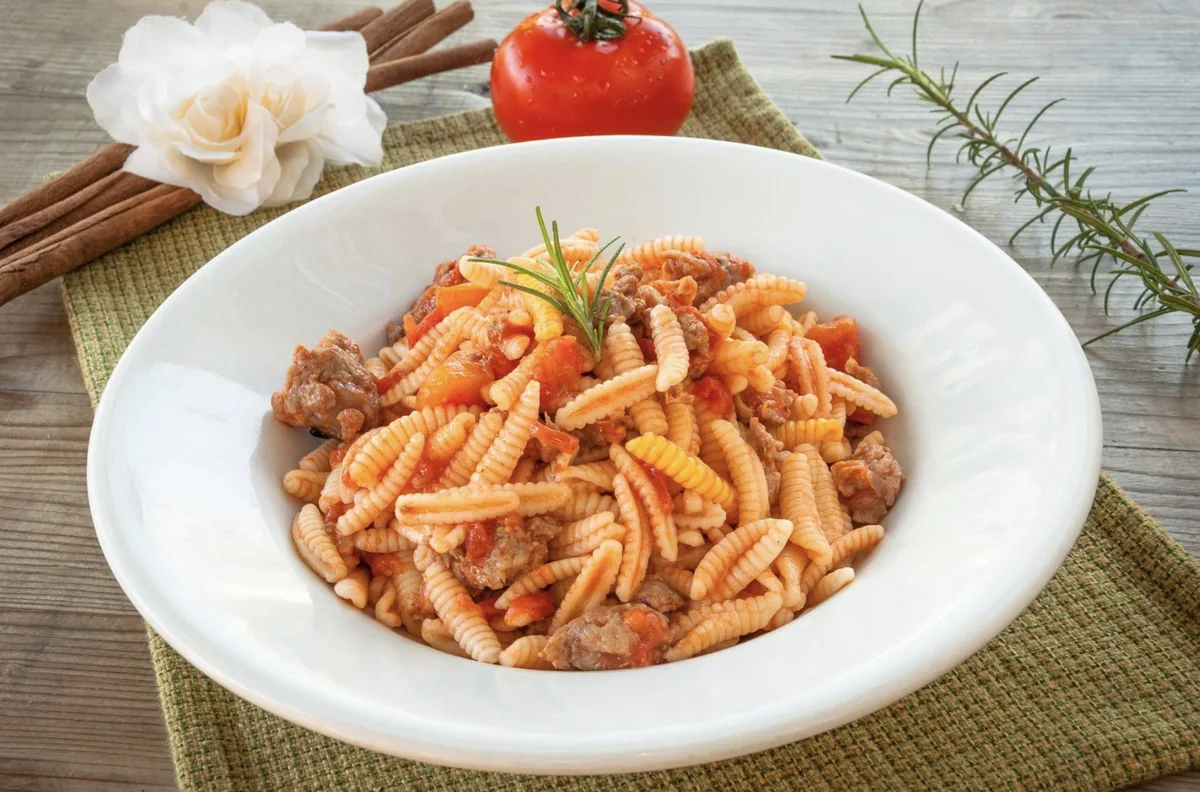
Malloreddus, also known as gnocchetti sardi, are small pasta shells made from durum-wheat semolina and water. Their ridged surface captures the sauce, while their firm texture remains satisfying under a substantial ragù. In the Campidanese version, tomato, onion, Sardinian sausage, saffron and pecorino create a plate that is savoury, aromatic and deeply comforting.
Why the pasta matters
Durum-wheat semolina gives malloreddus their golden colour, firm bite and ability to stay al dente. The grooves are not decoration: they hold pieces of sausage, tomato and grated pecorino. Cook the pasta in well-salted water and move it into the sauce while it is still slightly firm, allowing the final minute of cooking to bring the two parts together.
Build the sauce slowly
Begin with onion softened gently in extra virgin olive oil. Add the crumbled sausage and let it brown without drying out. Tomato follows, together with a small amount of saffron. The sauce should simmer until the meat is tender and the tomato has lost its raw sharpness. Pecorino is added at the table or folded through sparingly so that it seasons the dish rather than burying it.
The finishing oil
A robust Sardinian extra virgin olive oil gives the final plate freshness against the richness of sausage and cheese. Gariga Ramine brings a greener, more peppery finish; Gariga Isula is a softer choice when the tomato and saffron should remain dominant. Add the last drizzle after the heat is off, when its aroma can still be clearly perceived.
What affects its health value?
The pasta supplies carbohydrate and energy. Gluten is not harmful to most people; it becomes a medical concern for people with coeliac disease, wheat allergy or a clinically recognised sensitivity. For everyone else, the more important questions are portion size, how often the dish is eaten and what surrounds it on the table.
Tomato, onion, herbs and extra virgin olive oil are the lighter side of the dish. Olive oil contributes mostly unsaturated fat and aromatic plant compounds, although it remains energy-dense. The sausage and pecorino add protein, iron, vitamin B12 and calcium, but they also increase salt, saturated fat and the amount of processed meat. A moderate portion, plenty of tomato sauce and a vegetable side make the meal better balanced without making it less traditional.
Wine, water and the Sunday rhythm
A young Cannonau or Monica di Sardegna suits the tomato and sausage, with water always present beside it. Wine is a cultural accompaniment rather than a health ingredient. A small sweet and a little mirto may close the meal, but the real Sardinian character comes from eating slowly, sharing the table and allowing one substantial Sunday dish to remain an occasion rather than an everyday excess.