A Sardinian Dinner That Lasts Into the Night
On Sardinia, dinner is not a race. It begins when the heat fades, the table moves outdoors and food becomes part of conversation, family and time spent together.
The dish: culurgiones d’Ogliastra
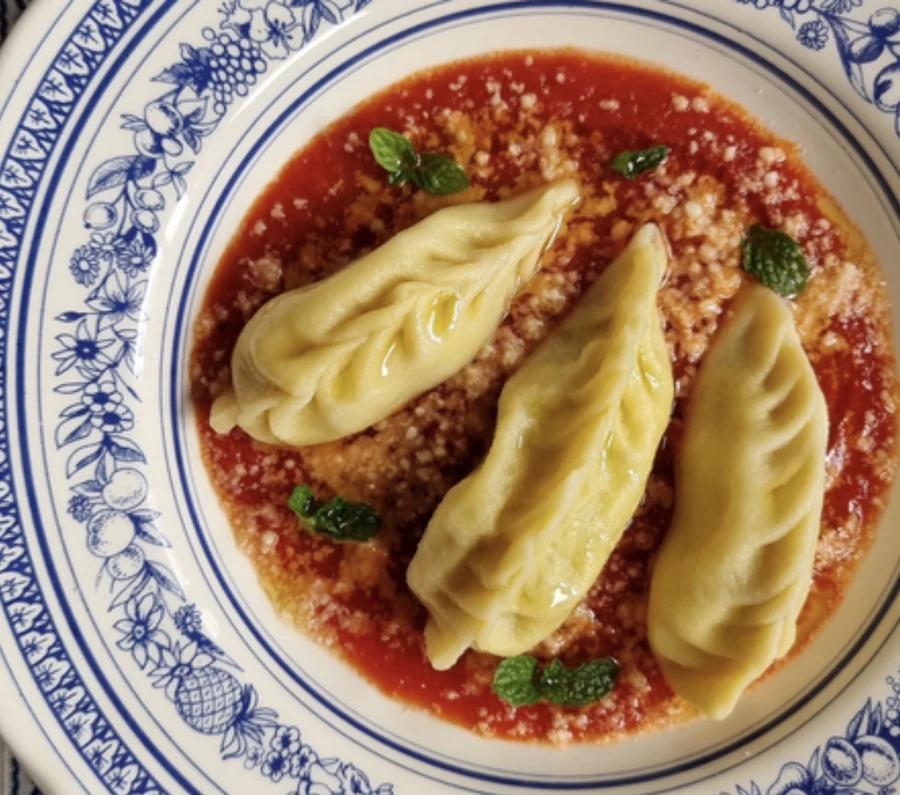
Culurgiones are one of Sardinia’s most distinctive dishes: handmade pasta parcels filled with potato, pecorino, mint, garlic and extra virgin olive oil. Their braided closure resembles an ear of wheat and turns each piece into a small work of craft.
Prepare the filling
Boil the potatoes until tender, drain them well and mash them while still warm. Add finely grated pecorino, chopped fresh mint and a little garlic-infused extra virgin olive oil. The filling should be creamy but firm enough to hold its shape. Let it cool before shaping the pasta.
Make and shape the dough
Knead semolina flour, water and a pinch of salt until the dough becomes smooth and elastic. Rest it, roll it thinly and cut it into rounds. Place a small amount of filling in the centre, then pinch and fold the edges alternately until the seam resembles a wheat ear. This is the most difficult part, and also the part that carries the identity of the dish.
Cook and serve
Boil the culurgiones in salted water until they rise, then cook briefly until the pasta is tender. Serve them with a simple tomato sauce, basil, grated pecorino and a finishing drizzle of Sardinian extra virgin olive oil. The sauce should support the filling, not hide it.
The character of the whole dinner
A Sardinian dinner develops slowly. Pane carasau, olives, tomatoes, vegetables, pecorino and local wine may appear before the main dish. Plates arrive in stages, conversation continues between courses and nobody clears the table the moment the food is finished. The evening may end with fruit, coffee and a small glass of mirto.
What this style of eating brings to health
The value does not come from one “miracle” ingredient. It comes from the whole pattern: vegetables, herbs, tomatoes, potatoes, grains, olive oil, modest portions of cheese and a low reliance on heavily processed food. Extra virgin olive oil contributes mostly unsaturated fats, while vegetables and herbs add fibre and plant compounds.
Just as importantly, people eat more slowly and socially. A long meal gives the body time to recognise fullness, encourages smaller pauses between bites and turns dinner into a moment of connection rather than rushed calorie intake.
At the table
Vermentino works beautifully when the meal is light and fresh. Cannonau fits a table with mature pecorino, cured meats or a later meat course. Wine accompanies the evening; it does not hurry it.