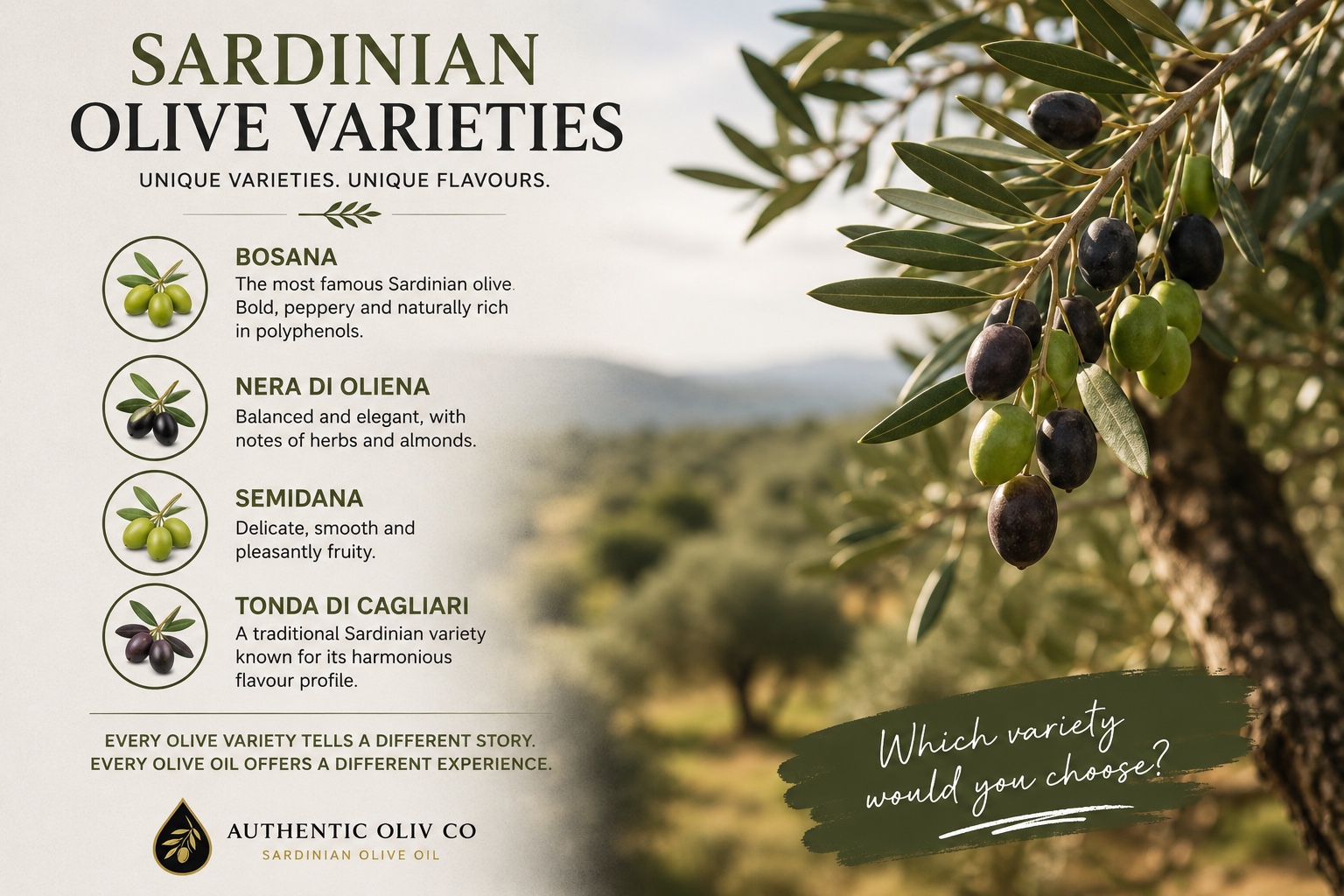
Sardinian extra virgin olive oil is not one single flavour. The island has its own olive varieties, landscapes and traditions, and each one can shape the final character of the oil.
Understanding olive varieties helps explain why one oil can taste grassy and peppery, while another feels softer, rounder and more suitable for everyday cooking.
Why olive varieties matter
Just like grapes influence the character of wine, olive varieties influence the aroma, bitterness, fruitiness and peppery finish of extra virgin olive oil.
Climate, soil, harvest timing and milling also matter, but the variety gives the oil its foundation.
Bosana
Bosana is one of the most important olive varieties in Sardinia. It is often associated with oils that have structure, fruitiness and a pleasant bitter and spicy finish.
For people who enjoy characterful extra virgin olive oil, Bosana can be a beautiful expression of Sardinian quality.
Nera di Oliena
Nera di Oliena is another variety connected with Sardinian olive culture. Oils made from local varieties like this can offer depth, elegance and a clear sense of origin.
These oils are not designed to taste anonymous. They are designed to carry the identity of the island.
Semidana
Semidana is often appreciated for balance and refinement. In the right hands, it can produce oils with harmony, gentle fruitiness and excellent use at the table.
How to choose between profiles
A stronger, peppery oil can work beautifully with grilled vegetables, soups, roasted meats and bread. A milder, balanced oil can be ideal for daily use, salads, pasta and finishing simple dishes.
The best choice depends on how you want to use it.
The Authentic Oliv Co approach
Our collection is built around different oil profiles, so customers can explore Sardinian extra virgin olive oil by flavour, intensity and purpose.
Every bottle should feel connected to origin, not just branding.