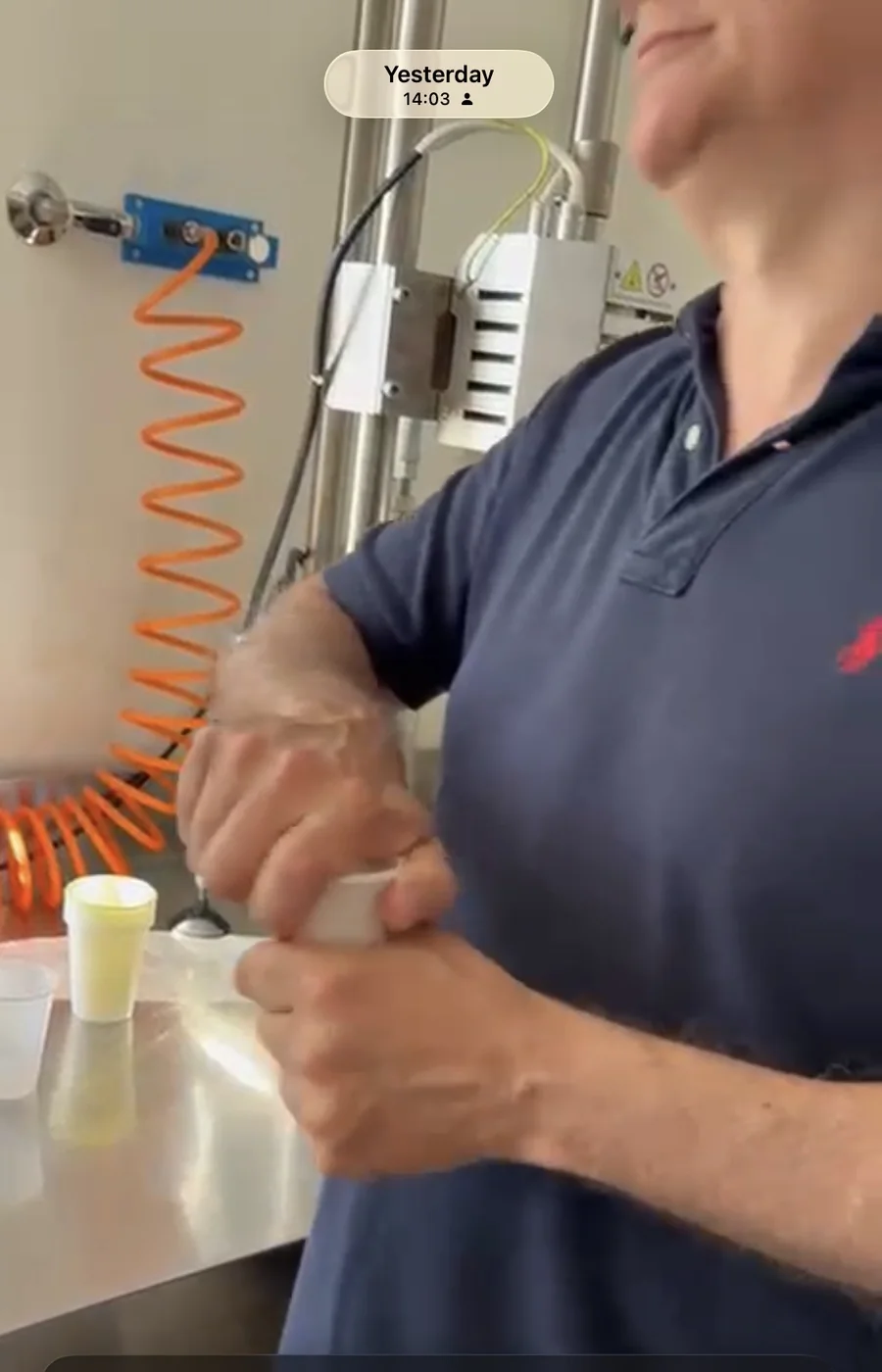
Professional tasting begins before the first sip
Most people judge olive oil while eating it with bread, salad or another dish. Professional tasters do something different: they evaluate the oil on its own, in a controlled way, so that aroma, flavour and texture can be understood without distraction.
The purpose is not to decide whether an oil is simply “strong” or “mild”. It is to identify its fruitiness, freshness, balance, bitterness, pepperiness and any sensory defects.
Why the sample is warmed in the hand
A small amount of olive oil is poured into a tasting glass or cup. The taster covers the top and gently warms the vessel in the palm of the hand. This helps volatile aromas rise and collect inside.
The oil may then be moved slowly around the glass. It should not be shaken aggressively. The aim is to release aroma, not to create a performance for the camera.
Do not let colour influence the result
Professional panels often use coloured tasting glasses so the appearance of the oil cannot influence judgement. A deep green colour may look impressive, but it does not prove superior quality, purity or authenticity.
Step one: smell carefully
Bring the glass close to the nose, uncover it and take a few controlled breaths. Fresh extra virgin olive oil may suggest freshly cut grass, green or ripe olive fruit, tomato leaf, herbs, artichoke, almond, apple or other natural notes.
Not every high-quality oil will smell the same. Variety, ripeness, place and production choices create different profiles. The important question is whether the aroma is clean, recognisable and alive.
Step two: take a small sip
Take a modest amount and allow it to spread across the mouth. Tasters often draw in a little air through the teeth. This technique helps carry the aromas towards the back of the nose and makes the flavour easier to evaluate.
You do not need to swallow a large amount. The purpose is to notice how the oil develops from the first impression to the finish.
The three positive attributes to look for
- Fruitiness: the overall fresh olive character perceived through the nose and mouth.
- Bitterness: a positive sensation often associated with greener fruit and fresh, well-made oil.
- Pungency or pepperiness: the warming or peppery feeling, often noticed in the throat.
Bitterness and pepperiness are not automatically faults. In many fresh extra virgin olive oils they form part of the oil’s natural character. What matters is harmony: no single sensation should feel disconnected from the rest.
What balance means
A balanced olive oil does not have to be delicate. It may be robust, intensely green and strongly peppery, or softer and more rounded. Balance means the aroma, bitterness and pungency make sense together and suit the style of the oil.
Professional evaluation also considers persistence: how long the clean flavour remains after tasting.
What tasters are trying not to find
Official sensory assessment also looks for defects. Unpleasant impressions may be linked to damaged fruit, fermentation, poor storage, oxidation or unsuitable handling. They can appear as stale, musty, vinegary, metallic or rancid notes.
This is why a laboratory figure alone cannot describe the whole experience. Chemical analysis and sensory assessment provide different, complementary information.
How to practise at home
- Use a clean, odour-free small glass or cup.
- Pour in a small amount of olive oil.
- Cover and warm it gently in your hand.
- Smell before tasting.
- Take a small sip and let it coat the mouth.
- Notice fruitiness, bitterness, pepperiness, balance and finish.
- Write down simple impressions without trying to sound technical.
Comparing two or three oils side by side is one of the fastest ways to learn. Plain water and a small piece of apple can help refresh the palate between samples.
Tasting is about attention, not theatre
Social media often reduces olive oil to colour, dramatic pouring shots or exaggerated reactions. Professional tasting is quieter and more precise. It is about paying attention to the fruit, the work of the producer and the condition of the oil.
Once you learn to taste this way, olive oil becomes much more than a background ingredient. You begin to recognise origin, style and craftsmanship in every bottle.
Authentic Oliv Co: authenticity, provenance and exceptional Sardinian extra virgin olive oil.